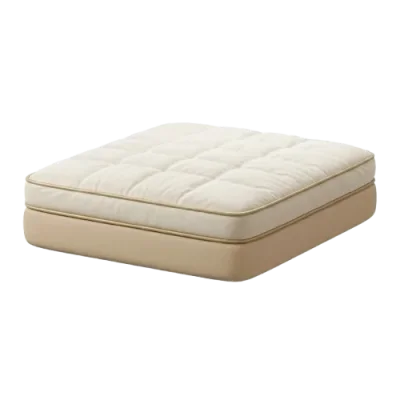
 Health & Wellness · Budgeting
Firm isn't better. Medium-firm is.
What the evidence supports, why the firmness number means nothing, and how to test before you commit.

4
weeks to adapt before judging

4
ways to spend, compared

0
standardised firmness scales
74 sold in last 24h
$7.00
$19.00
SAVE 63%
One-time purchase · Instant access · No brands recommended
Get Instant Access
Try Free with Ecomzy Pass
 30-day money-back guarantee
 Secure checkout via Stripe
 Instant delivery to your email
The Problem
Someone told you to get the firmest one.

The board-under-the-mattress advice is out of date
Where trials compare them, medium-firm generally does better than firm.
You're comparing firmness numbers across brands
There's no standardised scale, so the numbers aren't comparable at all.
You're about to spend hundreds on a hypothesis
Without checking whether the mattress is the problem in the first place.

Ten minutes in a showroom decided it
Fully dressed, on your back, in the middle of the day.
What You Get
Narrow. Then test.
Is It The Mattress?
The tells that point at the bed, and those that don't.
Four Ways To Spend
Compared by cost, evidence and reversibility.
Trial Calculator
Real testing nights after the adaptation period.

Trial Small Print
The seven questions to ask before buying.

Pillow And Base
The cheap fixes people run past.
Firmness Reality
Why the spec sheet can't answer this.
How It Works
From a showroom guess to a tested decision.
1
Check it's actually the mattress
Most back pain isn't, and this is an expensive way to find out.
~5 minutes2
Test cheaply first
Pillow, base, topper — in that order of cost.
~2 weeks3
Buy with a real trial
And give it four weeks before you judge it.
~10 minutes0
brands, models or retailers recommended — the method is narrowing then testing
4 weeks
before a new mattress means anything
3cm
of sag means it's finished, whatever its age
7
questions about the trial, asked before buying
Questions
Everything you need to know.
Isn't a firm mattress better for a bad back?
That's the advice most people have been given and it's out of date. Where trials have compared them, medium-firm generally performs better than firm for back pain, and the old suggestion of putting a board under the mattress isn't supported. It's also worth knowing the evidence in this area is weak, inconsistent and often industry-funded — which is exactly why the approach here is narrowing the field and then testing properly, rather than calculating an answer from your weight.
Can't you just tell me which firmness to buy?
Not honestly, and here's the reason: there is no standardised firmness scale, so one brand's medium-firm is another's firm and the number on a website isn't comparable between them. There's also no validated method for prescribing a mattress from body weight and sleeping position — that's a sales methodology rather than a clinical one. What does predict outcome reasonably well is what you personally find comfortable, which is why testing beats specification.
How do I know if the mattress is even the problem?
Two tells. Pain that's clearly better after sleeping somewhere else and returns at home is the suggestive one. Pain that's worse on waking but eases within half an hour of getting up is common and frequently not the mattress at all. There's also a physical check: a dip of more than about two or three centimetres, measured with a straight edge rather than by eye, means it's failed structurally regardless of age.
What should I try before buying a mattress?
The comparison ranks four approaches, and going straight to a new mattress comes last — not because mattresses don't matter, but because it's the most expensive and least reversible way to test an unchecked hypothesis. In cost order: the pillow, the base, then a topper. An old or sagging base in particular will reproduce the same problem in a new mattress within weeks, and can void the warranty.
What matters most about the trial period?
That it's long enough to be real. Bodies take a few weeks to adapt to a different surface and the first nights are often worse, so a trial under about a month tests nothing — the calculator shows how many genuine testing nights you have left once adaptation is subtracted. Then the small print: who pays return shipping, whether collection is included, restocking fees, whether a protector is required for the trial to be valid, and whether it's a refund or credit.
Reviews
Real beds, tested properly.
Loading reviews…